How BrightWolves equips its consultants to use AI well
AI tools are reshaping how knowledge work gets done, but the gap between having access to a tool and using it well is wider than most organisations admit. At BrightWolves, we have spent the past year building the internal scaffolding that turns AI from a curiosity into a reliable part of how our consultants deliver. The headline of that effort is our AI Champions programme, but the programme itself is only one piece of a broader approach.
Starting with the problem, not the tool
When AI assistants first landed in mainstream workflows, the temptation was the same one we see at our clients: try to use them for everything. Our view, internally and externally, is the opposite. AI earns its place in a workflow when it solves a real problem better than the alternatives, and not before.
That means our consultants are encouraged to identify where AI genuinely shortens a task, sharpens an output, or removes hassles, and to ignore it where human nuances are crucial. The aim is to achieve sustainable integration, not solely based on enthusiasm.
The AI Champions programme
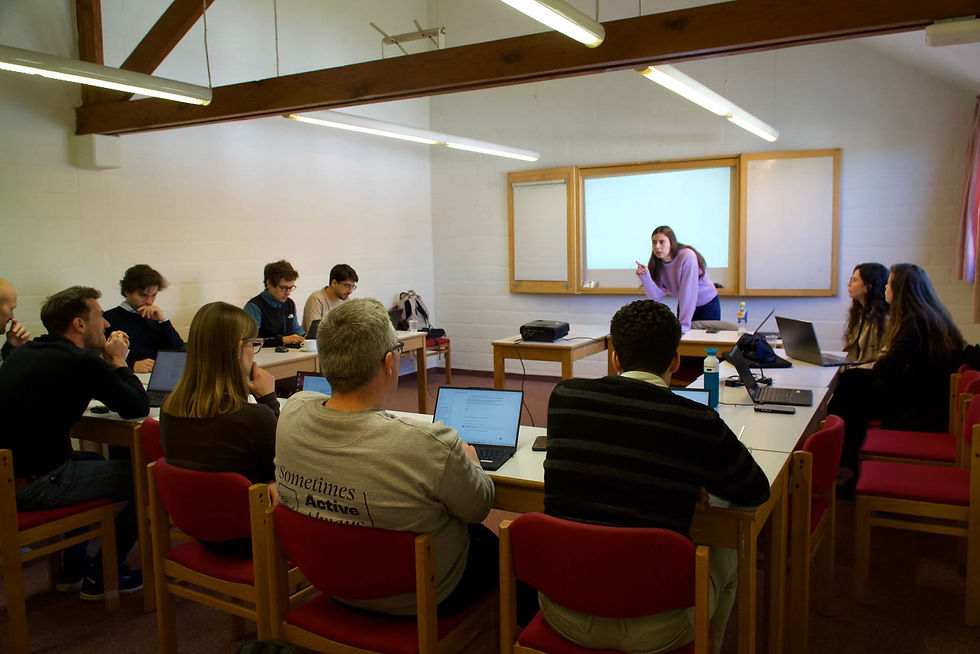
The AI Champions are a group of consultants across our practice pillars who act as the connective tissue between day-to-day delivery and the firm's AI capabilities. Their role is practical: they identify recurring pain points in our work, prototype solutions, and help colleagues adopt the ones that prove useful.
Three things make the programme work. First, the Champions are practising consultants, so the use cases they build come from real client work rather than abstract speculation. Second, they meet regularly to share what is working, what is not, and where the risks sit. Third, they have a mandate to say no: not every workflow benefits from AI and pushing back on weak ideas is part of the job.
Internal use cases that have stuck
Over the past year we have built a portfolio of internal AI use cases that now support our consultants in the background of their delivery work. We are deliberately not listing them in detail here, because the point is not the individual tools. The point is that they exist, they were built by consultants for consultants, and they are used in a way that seeks iterative improvement backed by assigned ownerships. We must keep challenging ourselves and drive change to deliver value to the clients & our talent.
What these use cases have in common is that each one started from a specific, repeated frustration in our own work, was prototyped quickly, tested against real tasks, and either kept or discarded based on whether it actually saved time and improved quality. That feedback loop is the asset, more than any single tool.

Guardrails matter as much as capability
Building AI tools without guardrails is how organisations end up with confidential data in the wrong places and recommendations no one can trace. Our consultants work to a clear set of internal rules on what data can be used where, which tools are approved, and how AI-assisted outputs are reviewed before they leave the firm. None of this is glamorous, but it is what makes the rest of the programme defensible. This Governance plumbing is crucial and needs to adapt quickly in our dynamic firm and acceleration of AI model capabilities.
Change management is the hard part
The lesson we keep relearning, in our own firm and at our clients, is that the technology is rarely the bottleneck. The bottleneck is adoption. A consultant who does not trust a tool, or who has not been shown how it fits their workflow, will not use it, however capable the tool is.
We treat this as a delivery problem in its own right. New internal tools come with short, practical onboarding. The AI Champions stay close to early users. And we are honest about the tools that did not land, because understanding why is more useful than pretending every initiative worked.
Why this matters
Investing in how our own consultants use AI is not a side project. It is how we keep our delivery sharp, and it is how we stay credible when we advise clients on the same questions. The firms that will get the most out of AI over the next few years are not the ones with the longest tool list. They are the ones whose people know which tool to reach for, when to ignore it, and how to make the output count.
If you want to know more, do not hesitate to reach out to our in-house expert Koen Triangle.


Seeing how a wiki handles navigation and content organization in practice can be quite instructive.